
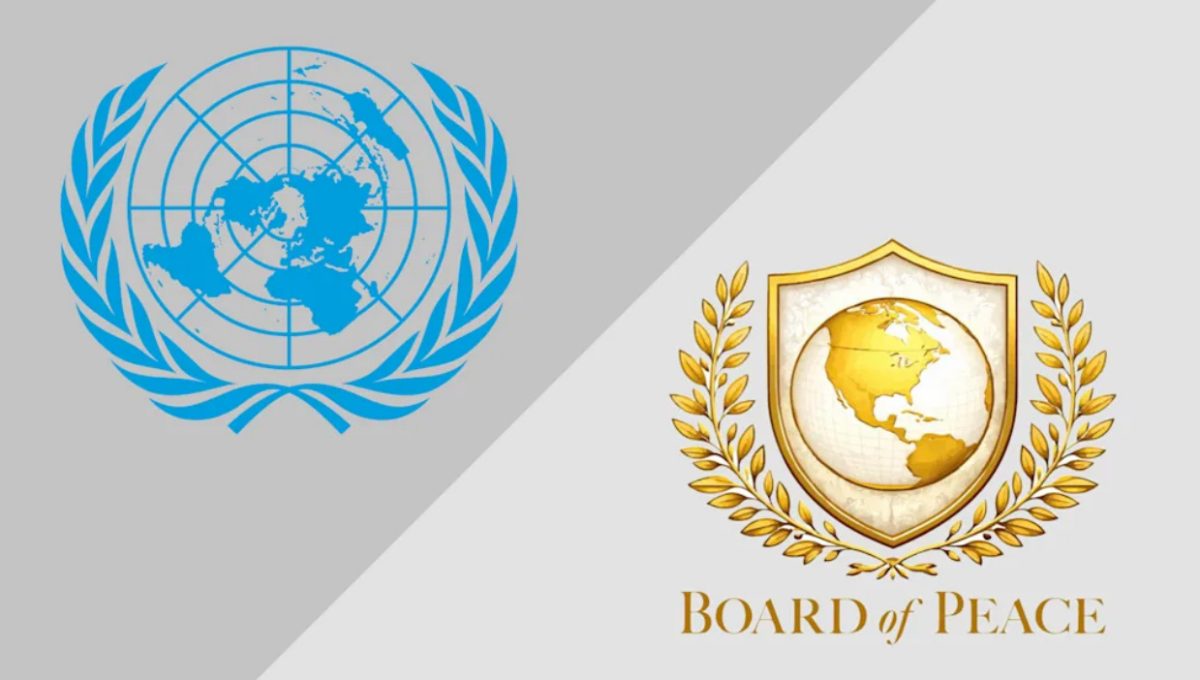
In President Donald Trump’s 2026 State of the Union address, he introduced what he called a “Board of Peace” (BOP), presenting it as a key part of his foreign policy.
Surrounded by allies, he shaped the moment as a symbol of diplomacy and global leadership.
On the surface, the BOP sounds very admirable. Every nation claims that they value peace. But a title alone does not define reality. Actions do.
The BOP was described as an effort to support reconstruction and diplomacy related to Gaza and broader Middle East negotiations. Trump suggested it could work alongside, or possibly replace, traditional international institutions like the United Nations in shaping peace.
But while the name BOP suggests diplomacy, recent events tell a more complicated story.
On February 28th, 2026, the United States and its allies launched large-scale airstrikes against Iranian military targets, marking a major escalation of tension in the Middle East.
Iran responded with missile and drone attacks on U.S. bases and regional partners, expanding the conflict and raising concerns about a broader regional war.
Rather than reducing tensions, as our “pro-peace” president said he would during his campaign, the situation just escalated.
The conflict marked one of the most significant U.S. military strikes in the region in years. Trump defends these actions as a necessary precaution to prevent Iran from rebuilding its nuclear capabilities and protect America’s interests.
It is important to mention that in 2015, the U.S. and several world powers signed the Joint Comprehensive Plan of Action, a nuclear agreement that was negotiated under Barack Obama that placed limits on Iran’s nuclear program in exchange for sanction relief.
Trump withdrew the U.S. from that agreement in 2018 and brought back sanctions on Iran. This move significantly increased tension between the two countries.
Supporters of Trump say that this approach reflects “peace through strength.” They argue that military action is needed to deter further aggression.
Opposing sides see this as a huge contradiction. Expanding military operations while branding leadership as the BOP raises many questions about what peace truly means.
So when our president stands under the banner of peace, you ask a reasonable question: What is the definition of peace?
Does creating a new body with the word “peace” in the name outweigh the impact of military escalation? Can a strategy that is heavily centered on force really align with the traditional meaning of peacebuilding?
Words carry weight. But words alone are not enough.
Peace requires sustained diplomatic efforts, restraint, and negotiation. If the Trump administration wants the “Board of Peace” to be more than a slogan that contradicts itself, the actions must consistently reflect that goal.
The presidency holds significant global influence. Claiming to be a peacemaker and demanding more than a symbol and title, it demands accountability.
To keep up to date with everything Decaturian, follow the Dec on all socials.
Facebook: https://www.facebook.com/Decaturian
Instagram: https://www.instagram.com/thedecaturian/
TikTok: https://www.tiktok.com/@the.decaturian

Joana • Apr 1, 2026 at 3:41 am
I like the “peace mainstreaming” strategy of Franz Jedlicka, an Austrian peace researcher. It is a (long term) peacebuilding approach that includes psychological factors like a non-violent upbringing of children.
Joana