America is supposed to be a free country. But if that were true, why is it constantly failing to protect our freedoms?
The First Amendment of our Constitution protects our right to petition the government, to peaceful assembly, to have freedom of the press, to believe in any religion we want (freedom of religion), and to speak freely (freedom of speech). Those rights are fundamental in our country, and that is why America is commonly known as the “Land of the Free.”
Those rights are constantly questioned or challenged.
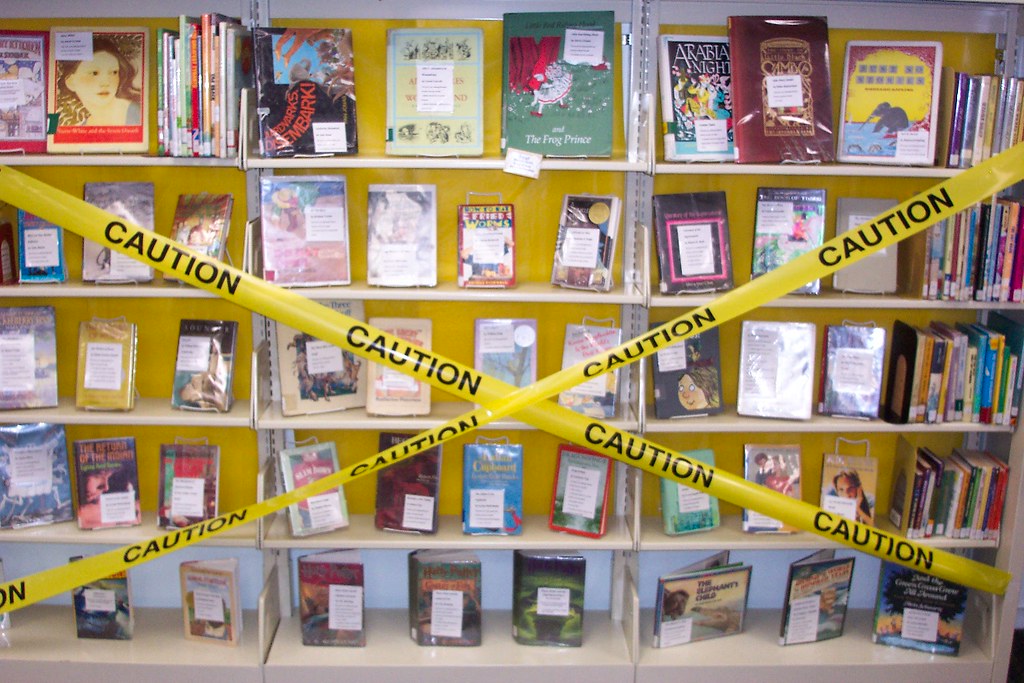
A prime example of a challenge to our freedom of speech is book banning, which, in all forms, is directly unconstitutional. It is a form of censorship that the government and public schools use to control the spread of specific ideas or viewpoints.
A wide variety of books are being banned, not just the ones that make people uncomfortable, like queer literature. Pieces of literary history, such as Harper Lee’s To Kill a Mockingbird, George Orwell’s 1984, or Ray Bradbury’s Fahrenheit 451, were banned because they may discuss topics of racism, sex, profanity, violence, or just overall controversial themes that the American government or schools want to control.
To those who want to ban these books, it doesn’t matter that they are an important representation of the evolution of society or that they promote a good understanding of how literature has changed and what we can learn from classic novels. So long as controversial topics are addressed, it doesn’t matter how good a book may be or do; there is room for challenge.
Now, there are very popular books being banned because they have occult themes or promote “witchcraft” and “Satanism.” Harry Potter is an example of this.
Harry Potter is a children’s series made to entertain, or promote one’s creativity and imagination, and yet some religious groups challenge it because they believe it to be “evil.”
Then, of course, you have your queer novels often banned because they bring up “uncomfortable” topics and “sexually explicit” content that students should not have access to. Sure, there are specific books that do have explicit sex scenes that go beyond the maturity level of a 7th grader, but there are countless novels that are sexually explicit, not only LGBTQ+ novels.
Beyond this, more books are being banned because of their “sexually explicit” nature that feature two men sharing a kiss, but because they are two men and not a man and a woman, once again, there is room for challenge.
Regardless of the genre, content, or reason, books should not be banned. It directly challenges our freedom of speech. It is a form of censorship and is unconstitutional. So here are some of my own personal recommendations of some banned books that you should read:
To Kill a Mockingbird by Harper Lee:
I first read this story when I was in 7th grade, and not because I was assigned to read it in school. I read it willingly and individually.
To this day, it remains one of my favorite novels. It’s banned because of its use of racial slurs, portrayal of racism, violence, and profanity. But for the same reasons, it creates an amazing and inspirational story that highlights racial injustice, morality, and courage.
The Great Gatsby by F. Scott Fitzgerald:
The Great Gatsby is commonly banned for its use of explicit language and inclusion of sexual content. Beyond that, it remains a brilliant book critiquing the American Dream, social class, and capitalism, mirroring many of today’s controversial topics.
All Boys Aren’t Blue by George M. Johnson:
Johnson’s book is being banned in many districts because of its LGBTQ+ content, commonly described as being “sexually explicit” and containing numerous uses of “profanity.” However, it’s a book that contains a number of essays featuring Johnson’s personal experience with growing up both black and queer. He explores themes such as his own dealings with gender identity, sexuality, familial relationships, and toxic masculinity.
This Book is Gay by Juno Dawson:
Similar to the reasons that Johnson’s book is being banned, Dawson’s This Book is Gay is being banned for its LGBTQ+ content, sex-education materials, and topics such as sexual health. For the same reasons, this book is interesting because of its honest and informative nature.
I Know Why the Caged Bird Sings by Maya Angelou:
Angelou’s book gets banned for its themes of sexual abuse, racism, and other various mature themes. This is Angelou’s memoir, and it serves as a form of detailed and “masterful” storytelling. She uses the mentioned themes to describe her story of self-expression, freedom, and self-discovery.
I could give dozens of recommendations of banned books that are interesting and important to read, but you would be sitting here forever reading this article instead of using that time to read the recommended books.
In short, I urge you to explore various lists of banned books and read them, not only because they are banned, but for the beautiful and meaningful stories that they tell. Recognize the reasons that they are banned and form your own opinion on them.
Banned books, censored or not, will remain for now in the eye of the public. Read them while you have a chance.