Millikin University will be receiving up to $53 million in bonds, and the city of Decatur has agreed to facilitate the process.
But don’t be confused. Decatur is not giving us this money; they are simply a middleman in the deal.
“Bonds are… an opportunity for external investors to buy into Millikin by lending us money,” Executive Vice President & Chief Strategy Officer Sarah Kottich said. “The investors are lending us money, and then we pay it back over a long period of time.”
To get the bond process started, Millikin first had to find a political organization to issue the bonds so that the investors could receive a tax exemption for the purchase of their bond. However, not all of the bonds will be tax-exempt; some will be taxable.
“Millikin approached the City of Decatur, and they were happy to serve as our issuer,” Kottich said. “So what that means is that they’ve gone through and completed their own the due diligence, including reviewing our plan of finance and what we’re going to use the funding for, etcetera, and based on that were willing to support Millikin as the bond issuer. Other options were for the County or State to serve as the issuer, however the City serving in this capacity was more cost efficient and timely, which we are grateful for.”
The bond process started around the time Pribbenow stepped into the role of president and is still ongoing. Millikin has yet to receive money from investors. Getting Decatur to approve was the first step to receive these bonds, and now Millikin must speak with underwriters, the people who can actually sell the bonds to investors.
Kottich said that Millikin hopes to begin the process of speaking to underwriters in late April or early May.
“Before I started in the role [as Millikin’s President], back in June… we identified a group through a request for proposal process and selected Columbia Capital Management… so they’ve been working with us over the last nine months or more to develop what we call a plan of finance, which is a way to look at where we’ve been financially, where we are, and where we’re going,” President Dr. Dean Pribbenow said. “Through that process, they have helped us determine that we are positioned to go for a public offering of bonds.”
Millikin has been working to get these bonds so we can begin refinancing and pay off some of our debt.
“[The] use of the money for us primarily is focused on restructuring some of our current debt that we have,” Pribbenow said. “Mostly, it would be refinancing our current debt, and then having working capital as we progress over the next few years to rebound on our enrollment trends and overall revenue and expenses.”
But not all of the money will be going to refinancing and pulling us out of debt. Some of the money will be used for much-needed renovations around campus.
“A portion of the money is going to be available for some renovations, and what we call capital projects or physical plant projects,” Kottich said.
Millikin also plans on updating its campus master plan with the money it receives.
“What we haven’t done in a number of years is update our campus master plan,” Pribbenow said. “A master plan is basically… a 10-year plan — a vision — for how you want your campus to look over that time in terms of buildings and other structures. But a part of that that we haven’t done is what’s called a deferred maintenance plan. And so, an outside firm will look at all your existing structures, and help you answer, ‘Which ones need extra investment and attention to modernize them or bring them up to speed to meet current and future needs?’”
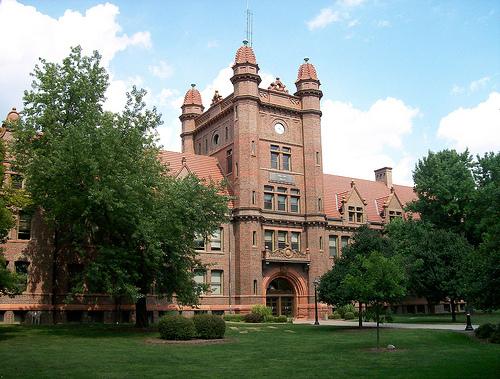
Millikin has a mix of new buildings and old buildings, and Pribbenow highlighted Shilling as one of the buildings that may need some enhancements.
Administrators also hope to loop the students into this process and may even ask for input on places around campus that need more attention.
“There’ll be an opportunity for students to give input on the campus master plan update, which likely will occur next fall,” Kottich said.
Now, I’m sure you’re asking the question, “Well, we have to pay these bonds back. How is it going to help us get out of debt if these bonds are making us go into more debt?”
Millikin has a plan to pay them back, hopefully, without going into more debt.
“We’re going to be paying [the bonds] off through our operating revenue, so from the money we make off of tuition and housing and fees,” Kottich said.
Since the pandemic, many private colleges have seen a decline in enrollment. Before the pandemic, Millikin had about 2000 students enrolled, but it has declined to 1500 students. Millikin is trying to get the enrollment number back up to 2000.
“I can’t give you an exact timeline yet, because we’re still in the process of negotiating the bonds, but there is typically a 30- to 35-year time period for repayment,” Kottich said.
Although we don’t have all of the information about the bonds, and we will have to wait to see how we pay off the bonds, the administrators behind this hefty project are happy with the work that has already been done and what that means for Millikin’s future.
“Something that I am proud of is that if a university is able to issue bonds, that means that there are investors who think that the university is a good investment, and so I view it as a vote of confidence in where Millikin is and where it’s positioning itself to go forward,” Kottich said. “So I’m really happy about that.”
From the beginning of his term, Pribbenow has spoken about how he wants to connect the Millikin community and the Decatur community, and these bonds are a step forward to a hopefully positive and collaborative relationship.