“What does it mean to you to be a woman?”
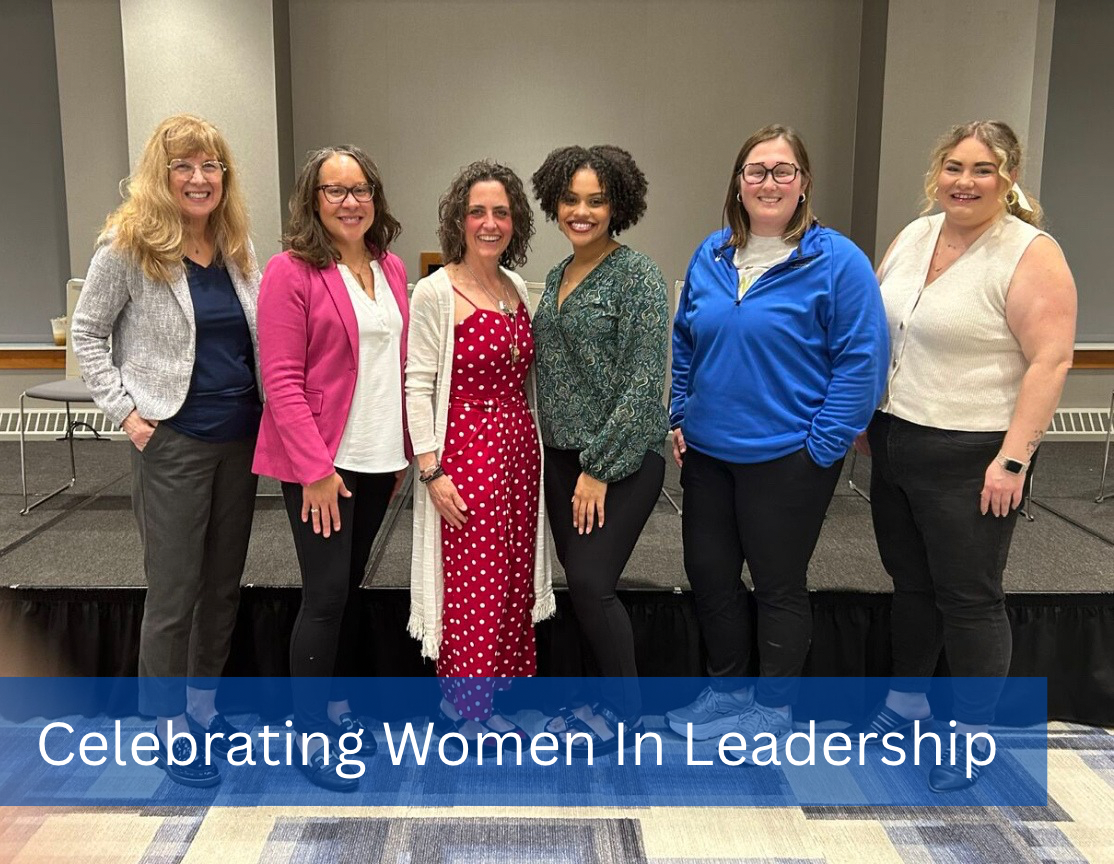
This was the question asked this past Tuesday night, as Millikin hosted a Women’s History Month Panel: Celebrating Women in Leadership.
The panelists were:
Dr. Denice Love, Associate Professor of Elementary Education
Ashley Batchelder ‘13, Director of the Mount Zion Library
Kim Holman ‘96, Owner of HomeGrown Collective
Julia Roundtree Livingston, DEI Manager for Illinois Supreme Court Commission on Professionalism
Cleah Roberts ‘23, Registered Nurse in ICU
Kyline Humm Burge ‘14, Principal of Sangamon Valley High School
And Nicole Cook, Associate Dean for Campus Life, Residence Life, and Student Conduct, who led the discussion. With Cook’s idea along with Molly Berry, Interim Vice President of Admission and Student Affairs, and a planning committee, Cook and Berry knew the women on the board whether through friends, classes, or mutual connections.
Cook asked 5 questions throughout the event.
1- What does it mean to you to be a woman?
In a room full of women, this question opens the door to memories and truth. Being a woman is a dynamic balance that is powerful, complex, and human. It isn’t a single role but the freedom to keep redefining who you are while you care for yourself and others.
Holman highlighted the role of a woman as “storytellers, secret keepers,” and communicators, and that being a woman is being strong and keeping it together. Women often hold family history, emotional memories and unspoken truths. Being a woman can mean tending to those stories and making sure people feel seen and remembered.
Being a woman is everyday leadership as women often lead from the middle: organizing, encouraging, supporting, and quietly steering families, teams, and communities.
Being a woman is having the capacity for both resilience and rest. It’s not only about pushing through, but also allowing yourself to be tired, vulnerable, cared for, and still feel worthy. Roberts noted that growing up surrounded by strong Black women, she learned in adulthood, it is also okay to be soft, lean on others and to “be a girl” who is deserving of love, care and rest.
There is also an agency in self-definition. Across all the panelists, being a woman means you get to define what womanhood looks like in your own life, whether it’s a career or caregiving, bold or quiet, adventurous or anchored, or all of the above at different times.
Burge then said something that really stuck with me, and this idea was also highlighted throughout the night.
“Always be the cheerleader for everybody you know because [it not only] empowers everyone around us [but] makes us a better person,” she said.
It is a choice to support others, to be the cheerleader, the mentor, and the person who says, “You belong here,” and also back that up with action.
2- How does being a woman intersect with your other identities?
It’s clear that womanhood never stands alone as it intersects with race, class, sexuality, profession, and family background. Being a woman intersects with other identities by changing the stakes and expectations in every room you enter.
Something I take to heart similarly to Holman is intuition.
“The biggest thing as a woman [is] to really hone in on my intuition, trust it, and if your gut says don’t do it, don’t do it, and sometimes it’s okay to do things scared, and you got to figure out the difference [between fear and intuition],” she said.
For Livingston and Roberts, being a woman of color means navigating spaces where you may be both hyper-visible and underestimated, and needing to be “even more prepared.” Womanhood does not exist outside of other identities but shapes them.
For Batchelder, being a woman who grew up below the poverty line shaped her focus on survival, education, and breaking cycles more than gender alone did.
For Burge, an identity shift sparked when she was injured in college. Soccer defined her, and when she had to step away from the sport she loved, she rebuilt her sense of self around education and leadership.
“My identity shifted to, how can I be an amazing educator? What can I do in my education to make sure that I was the best that I could be for my students?” she said.
As a woman in a male-dominated administrative world, she pushed herself to earn advanced degrees, pursue scholarships, and step into roles where she could influence systems beyond the classroom.
“When you have identities shift, as long as you have that forethought process of how you make it possible, you can achieve it,” she said.
Professional identity also shapes what womanhood feels like. It proves competence, pushing into male-dominated leadership, lifting each other up, and making room for more women. Together, these stories make it known that womanhood never stands alone.
3- Who is someone in your life that inspires you?
Among the panelists, three types of inspirations stood out to me:
1- Mothers and grandmothers.
These are women who chose love and responsibility even when life was hard. This looks like going back to school later in life, raising children largely on their own, and modeling resilience and tenderness at the same time.
For Dr. Love, it was her mother who emphasized to her and her siblings that education was important and read to her often despite not having an education background herself.
“She was the one who said, ‘You should be a teacher.’ I didn’t know what I wanted to do, and she was like ‘You’re really great with people.’ I was so grateful that she set me on that path,” Dr. Love said.
2- Everyday mentors and colleagues
These are the people who see potential in you before you fully see it in yourself, celebrate your wins, and use their position to bring you into rooms you wouldn’t otherwise enter.
Livingston admired a leader who is known for “doing the right thing because it’s the right thing,” even when it’s unpopular. She used her position to bring others into rooms they might never have entered alone, and recognized her own privilege and turned it into an opportunity for someone else.
3- Quiet caregivers and community
These are the ones who show up for others without praise whether it’s driving someone to dialysis, tutoring kids, sharing resources, or just picking up the phone twice a day to check in.
Robert’s mother taught her love and vulnerability. Growing up, her mother took care of her disabled grandmother.
Seeing someone taking care of someone else has inspired her.
“There’s nothing in this but the simple love that you have for this person,” she said. “To be in a setting where you don’t have all the tools, you don’t have all the knowledge, but you’re going to take care of someone to the best of their ability.”
4- If there was a Women’s Day anthem, what song would be on your playlist?
Dr. Love – Run the World (Girls) by Beyonce and I Am Woman by Helen Reddy
Ashley Batchelder – Labour by Paris Paloma
Kim Holman – any song by Tori Amos
Julia Livingston – Fighter by Christina Aguilera, P!nk, All I Do Is Win
Cleah Roberts – I’m Every Woman by Chaka Khan
“We are all women, we all have very similar story arcs that I’m sure overlap, and not everyone’s story is the same,” Roberts said.
Kyline Burge – Perfect by Ed Sheeran
Link to Spotify Playlist: https://open.spotify.com/playlist/4BEB4HazKrUi65rS8QEeZ4?si=pUe5M_eqSIqW-9AMLsLjSg&pi=WJPiXboKTECy9
5- How do you think we as people can build stronger, more supportive communities, especially across different generations?
I resonated with Robert’s response of being “generationally supportive” and that’s where it should start. Younger women often feel judged by older generations especially when they hear, “Back in my day, we didn’t do that.”
That kind of comparison creates distance. By focusing on what we have in common, having shared experiences, we start there. When generations see each other as full, imperfect humans, trust begins to grow.
Supportive communities need leaders who are willing to “be in the trenches.” Burge and the other panelists retouch the importance of support and being a cheerleader for others.
A quote Burge uses often is, “People don’t need buildings of people.”
Stronger communities form when we choose to be physically present with each other. “Leading by example, supporting each other, always asking how people are,” Burge said. “As long as people know they’re cared for, you know they feel valued.”
Livingston notes that there are now five generations in the workforce. With multiple generations learning, working, and living side by side, one size never fits all. This means working harder to listen carefully to women’s needs and to recognize and respect that.
“Just recognizing what we need from each other . . . people might need you, women might need you in different ways,” she said.
Holman mentioned safe spaces and supporting artists. Through her business, HomeGrown Collective, that’s what she’s exactly trying to do. By creating safe and human-centered spaces, people open up.
“I’m trying to create a work environment that I love, and I’ve always enjoyed supporting artists,” she said. “That’s what my business is about . . . community and the neighborhood.”
A supportive community is one where people believe, “I can be honest here and still belong.”
All together, each woman touches on the fact that stories help bridge generations. It creates a sense of empathy and connection, and an opportunity to stay youthful. In the end, stronger cross generational communities are built from everyday choices. When we do that, we learn, grow, and thrive together.
There were many people in attendance including three generations of women: grandmothers, mothers, and daughters. I’m glad I went, even though I was the only student there. I left the panel feeling empowered as a woman, and curious how I can make a difference.
To keep up with everything Decaturian, follow the Dec on all socials.
Facebook: https://www.facebook.com/Decaturian
Instagram: https://www.instagram.com/thedecaturian/