
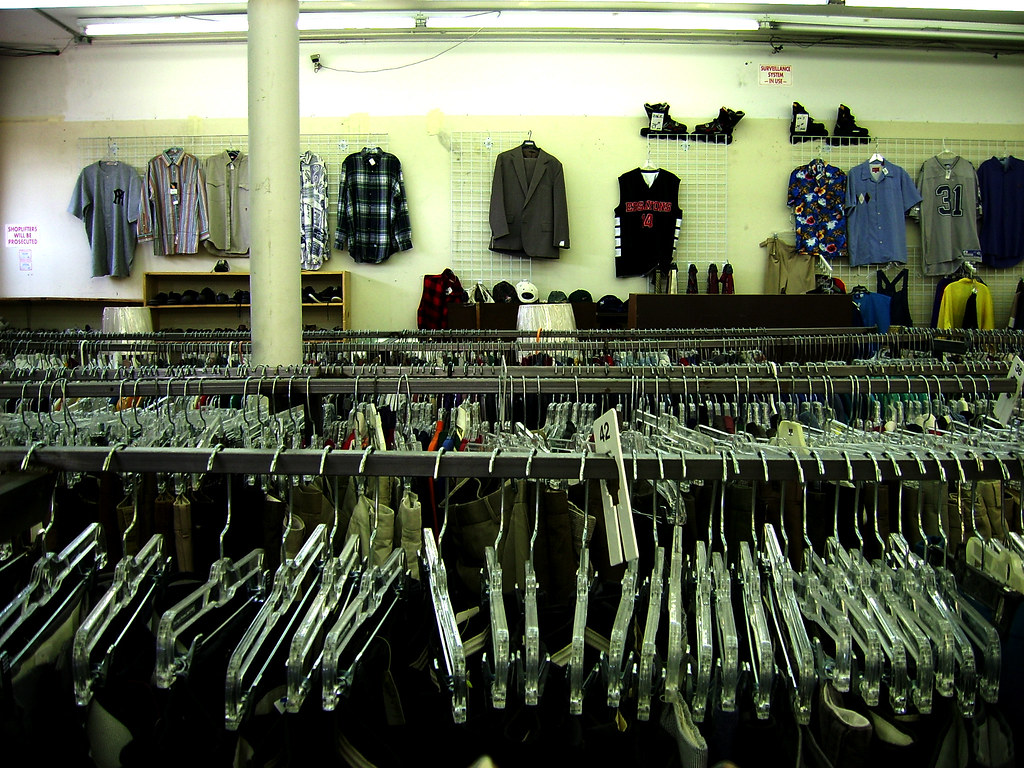
Since it gained mainstream popularity in the 1960s and 70s, thrifting has been a trend throughout the years.
However, in the last ten years, thrifting has been on the rise with the introduction of sites such as Depop, Vinted, and Poshmark.
The thrifting and resale market as a whole has risen, with a 143.5% secondhand market growth since 2018. In 2024, 58% of US shoppers purchased secondhand.
And now, with the addition of the rising sustainability trend, those numbers continue to grow.
So how can you make the most out of your thrifting experience?
1. Pay attention to the fabric.
The last thing you want from a thrifted item is to take it home only to realize it’s 100% polyester.
With that quality, the piece will pill and fall apart in no time. Instead, aim for natural fibers like wool, cotton, or high-quality denim.
Not only can you maximize your thrift finds, but also the length of wear.
Make sure to check the stitching, too. A quality stitch is a sign of a better quality and longer-lasting piece.
2. Keep an eye out for wear.
Oftentimes, a piece looks promising.
What’s hidden, however, is the pull of a sweater, a hole in the fabric, or the dry rot of a shoe.
Know what to look out for.
Don’t waste your money on a piece that is either not worth the repair or is unable to be repaired. Dry rot, especially, is irreparable and poses the risk of spreading to other pieces, so never take the chance.
However, depending on the wear and fabric quality, you can often find worth in repairing something as simple as a broken zipper or a hole in the seam.
For that, I recommend learning the basics of sewing. Learning how to sew a new zipper in place, properly use a seam ripper, and sew basic stitches is often straightforward, and there are plenty of videos on YouTube that can help you learn those skills.
3. Thrifting is meant to be sustainable, so don’t overconsume.
When thrifting, try to wear something neutral.
A simple pair of jeans and a neutral shirt often go a long way. This way, when you’re trying thrifted clothing on, you have a better understanding of how to style or match them.
It’s important to keep in mind how much you’re purchasing, even when thrifting.
If you don’t truly see yourself wearing it, don’t waste your money on it.
Keep in mind a few questions: “Do I have items in my closet that I can style this with?” “Will I actually wear this?” “How do I plan on styling this?”
This not only saves your wallet, but it also preserves the point of thrifting: sustainability.
4. Consider the care instructions.
If you find a delicate piece that requires careful hand-washing or dry-cleaning, is it really worth your money?
High-maintenance clothing will more than likely be avoided because of said care instructions, once again collecting dust.
If the time to care for a piece is not worth it to you, leave it behind for someone else.
There are a dozen more tips I can give you, but for this article, I provided you with some good beginner tips.
A few honorable mentions are searching for specific brands, creating a Pinterest board of outfit ideas, and thrifting around it, and understanding what an item, especially vintage or brand-name items, is truly worth.
Don’t just thrift for the sake of thrifting. Thrift to be sustainable, both for your wallet and your wardrobe.
Understand that you might leave with nothing, and that’s okay. It’s better to leave a solid piece of clothing for someone who understands and appreciates it rather than allow it to rot away in a corner of your closet to never be worn again.